



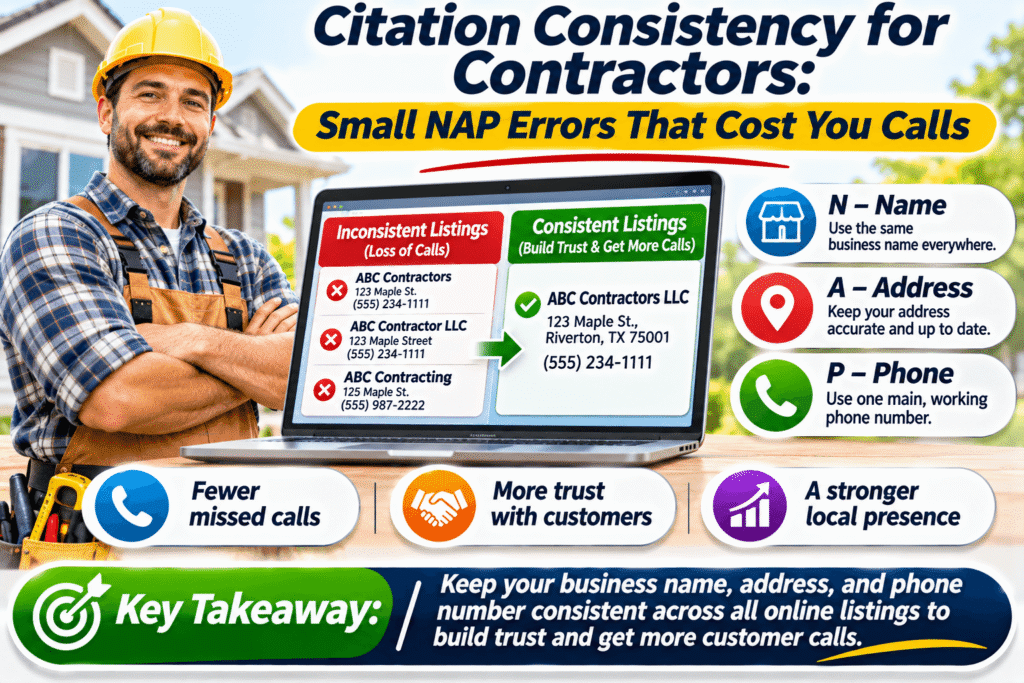
Citation Consistency for Contractors: Small NAP Errors That Cost You Calls
A remodeling company moves from a home office to a small shop across town. The owner updates the website and the truck wraps but forgets the dozen online profiles set up over the years. Months later, a homeowner comparing contractors finds three different addresses for the same business and starts to wonder whether it is even the same company.
That kind of mismatch is what local marketers mean by inconsistent citations, and it is one of the most common problems in small business marketing.
What a Business Citation Actually Is
A citation is any online mention of your business name, address, and phone number, often shortened to NAP. Citations appear in online business directories, map apps, social profiles, industry associations, and local news sites. Some include a link to your website and some do not.
Customers and search engines both use these mentions to confirm that a business is real and where it operates. Google’s own local search guidance stresses complete, accurate business information, and the same principle applies everywhere else your company appears. When the details match, the picture is clear. When they conflict, people have to guess.
Where Contractors’ Listings Usually Go Wrong
Home improvement businesses run into a few predictable problems:
- Name variations, such as “Smith Remodeling,” “Smith Remodeling LLC,” and “Smith Home Improvement”
- Old addresses left behind after a move or a switch from a home office
- Tracking or cell numbers used for one campaign and never replaced
- Suite numbers or street abbreviations that change from site to site
- Duplicate listings created by the owner, a former employee, or an agency
None of these is serious on its own, but together they make your business harder to verify.
A Simple Process for Cleaning Up Citations
First, decide on one official version of your name, address, and phone number, and write it down. Use the name you are registered and known by, without extra keywords. Next, search for your business name and phone number to find where you are listed, and record each site in a spreadsheet along with what it shows.
Then fix the listings you control, claim the ones you can, and request corrections or removal of duplicates elsewhere. When you add new listings, use the same details every time. On Dir Bull, for example, you can create a profile in the Home Improvement Services directory category, where homeowners compare local remodelers, window installers, and other trades. Treat it like any other citation: complete, accurate, and identical to your master record.
Pick One Version and Stick to It
Citation consistency is unglamorous work, and it will not guarantee higher rankings by itself. It does remove a common source of confusion for customers and search engines alike. Choose one official NAP, audit where your business appears, and make sure every new listing matches. Dir Bull and other directories are most useful when the information on them agrees with everything else customers find.
Frequently Asked Questions
What does NAP stand for in local SEO?
NAP stands for name, address, and phone number. These three details identify a local business online. Keeping them identical across your website, Google Business Profile, and directory listings makes it easier for customers and search engines to confirm that every mention refers to the same company. Some marketers add a W for website, since your URL should match too.
Should I include “LLC” or “Inc.” in my business name on listings?
Use the name customers know and that appears on your signage, invoices, and website. If you include the legal suffix in one place, it is cleaner to include it everywhere. What matters most is avoiding several versions of the name, and never adding keywords or city names that are not part of your real business name.
How do I list a service-area business with no storefront?
Many contractors work from home and visit customers at their properties. On Google Business Profile, you can usually hide your street address and show a service area instead. On directories that require an address, follow each site’s rules and keep whatever you show consistent. Never use a fake or virtual address to appear closer to customers.
Is it a problem if some old citations can’t be fixed?
A few outdated mentions on small sites are common and usually not worth losing sleep over. Focus first on the profiles customers actually see, such as your Google Business Profile, major map apps, and directories that send you visits. Request corrections where you can, document the rest, and make sure every new listing uses your current details.

Dir Bull Editorial Team
We help local customers find the best businesses in their area and help those businesses grow.
Related Posts
 19Nov
Why HVAC Companies Should Audit Their Business Information Before Peak Season
A wrong phone number or outdated hours costs the most when demand spikes. Here is a simple pre-season checklist for heating and cooling companies.
Read More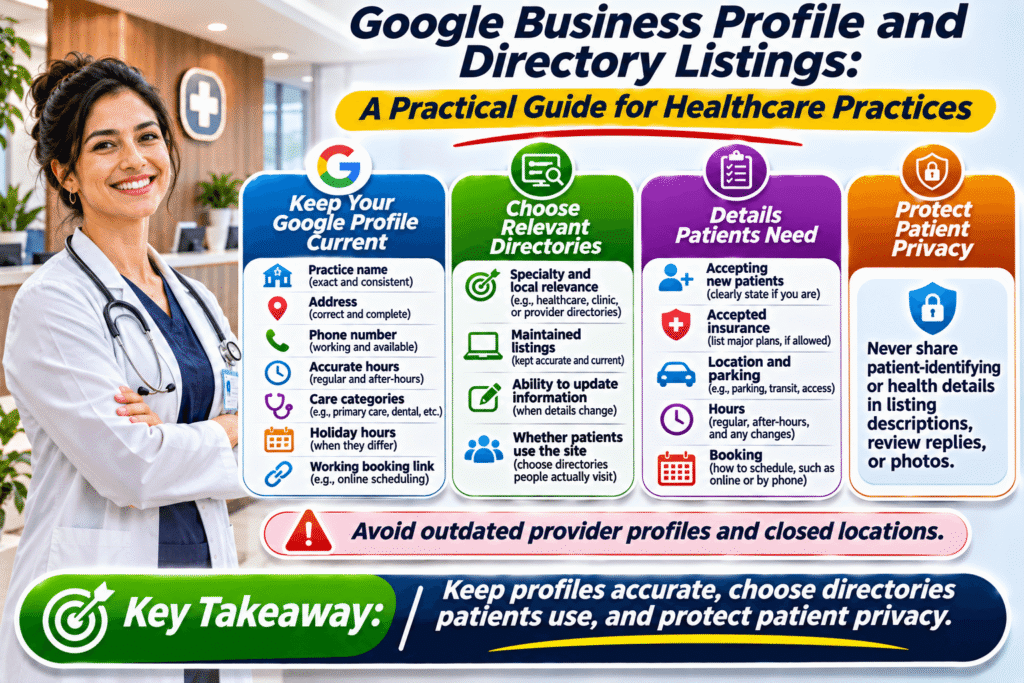 10Nov
Google Business Profile and Directory Listings: A Practical Guide for Healthcare Practices
Patients often choose a clinic from a map listing before visiting its website. How to keep your profile current and pick directories worth your…
Read More